






Your PPC agency.
Paid advertising
that pays for itself.

A PPC agency plans, builds and manages your paid advertising across search and social platforms, and is accountable for what each click returns. We set the account up, run it week to week, and move budget towards whatever is producing customers. Pay per click will not suit every business. If your numbers say it won’t work, we will tell you that before you spend anything with us.
Paid search & social

PPC covers every ad you pay for by the click, wherever it runs. Most New Zealand businesses begin with Google, because that is where intent is easiest to read, and our Google Ads management service drives this. The platform is a means though, not the strategy. What matters is where your next dollar returns the most, and that answer shifts as an account matures and the cheap demand runs out. We scope every engagement around that question rather than around a platform, whether the work sits inside a wider search engine marketing campaign or runs as paid media across three networks.

What a PPC agency does

PPC stands for pay per click. You are not buying a slot or a month of exposure – you enter an auction, your ad appears, and you are charged only when somebody clicks. That single mechanic is why paid search is measurable in a way most advertising is not, and it is also why it punishes inattention so quickly. Every click you did not want is still a click you paid for.

A PPC agency exists to make the clicks you buy the ones worth having. In practice that means:

  • Audit what is already running before changing anything, so there is a benchmark.
  • Research the keywords and audiences worth paying for, and the ones that look relevant but never convert.
  • Build the account structure so budget, bids and messaging can be controlled at the level that matters.
  • Write and test ad copy against itself rather than shipping one version and hoping.
  • Manage bids and budget across campaigns, devices, locations and times of day.
  • Review the search terms report and add negative keywords, which is where most wasted spend hides.
  • Verify Google Analytics conversion tracking before optimising anything, because every decision afterwards depends on it.
  • Report on what happened, what changed, and what happens next month.

That list looks tidy on a page and considerably messier inside an account. A good share of the work is subtraction – turning things off, excluding audiences, adding negatives, cutting the campaigns that look busy and convert nobody. A well-run account usually spends less than a badly run one on the way to the same number of customers. The saving is not glamorous, but it is where most of the early gain sits, and it arrives faster than any of the clever work does.

The platforms we run, and when each is worth it

Advertising platforms are tools, and each one is good at something the others handle poorly. Choosing between them is a budget allocation decision rather than a preference, so here is the honest version of what each does well and where it stops making sense.

Google Ads (search) – Captures demand that already exists, reaching people at the moment they type a query and want a solution. It is usually the most contested auction of the set, because you are bidding against everyone else in your category for the same intent. It is the wrong choice when nobody is searching for what you do yet, or when the volume is too light to learn anything from.

Microsoft Advertising (Bing Ads) – The same search intent, on an auction we consistently find less crowded. Microsoft syndicates Bing, Yahoo, AOL, DuckDuckGo and Ecosia as a single search network, and fewer advertisers competing for the same terms usually shows up as a lower cost per click in our accounts. It will not solve a volume problem though. The audience is smaller than Google’s, so it adds to a plan rather than replacing one.

Google Shopping – Puts the product, the price and the image in front of someone before they click, which suits retail buyers comparing options on appearance and price. Cost is driven by feed quality as much as by your bid, because the ad is built from your product data rather than from ad copy. Skip it if you do not sell physical products, or if your pricing is not competitive, because Shopping makes price visible before anyone clicks.

Meta Ads (Facebook and Instagram) – Creates demand rather than catching it, and re-engages people who already know you. The audience is broad, defined by interest and behaviour rather than by a query. Meta’s auction weighs ad quality and predicted engagement alongside your bid, so a more relevant ad can win against a higher one. It struggles when you sell something considered and expensive with no way to nurture the lead after the click.

LinkedIn Ads – Reaches a narrow professional audience by job title, seniority, company or industry, which makes it the one place you can put a message directly in front of B2B decision makers and the people who influence them. It is priced at a premium for that targeting, and only defensible when the deal size justifies it (for example, a high value SaaS product). Wrong choice if your customer is a consumer, or if your average order value cannot absorb the cost.

"Almost every Google Ads account we take over is paying for search terms that have never converted. Not once, in the account's entire history. It's usually around 10% of spend. The best bid strategy in the world can't fix an account that's paying for the wrong searches. So, we start there, cut the waste and put that budget where the conversions already are."

24X increase in the overall conversions.

95% reduction in the cost per conversion.

440% increase in the conversion rate.

142% increase in organic revenue.

426% increase in Google Ads revenue.

95% increase in Meta Ads revenue.

Hussmann

Hussmann, a Panasonic owned company, is a leading supplier of commercial refrigeration systems and support services to larger scale enterprises such as supermarkets and independent retailers.

Peter Sheppard

With flagship stores in Melbourne, Sydney and Brisbane, Peter Sheppard have been providing unrivalled service and the perfect fit for over 50 years.

OUR PEOPLE

Meet our
PPC team

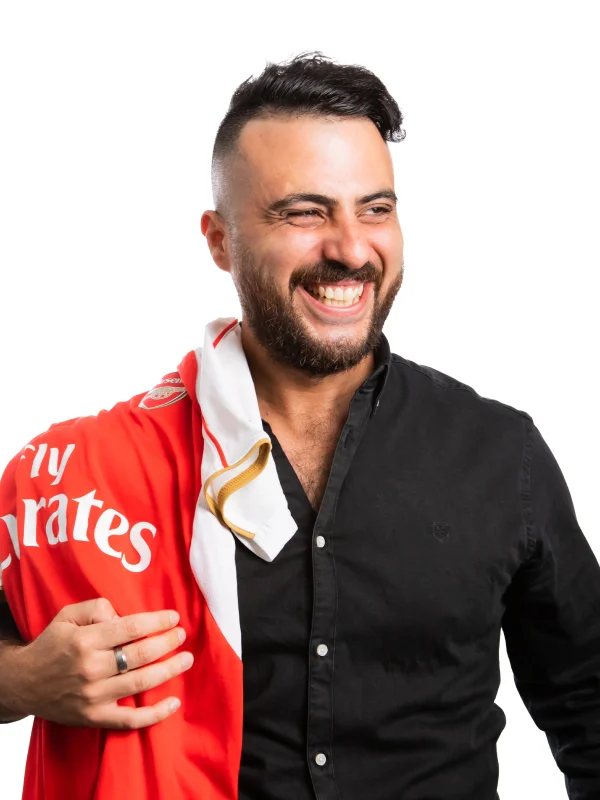
Harris Panayi
Harris Panayi

Client Services Director

About

Harris has been part of the SIXGUN fabric nearly since its inception, running the Client Services department and specialising in client, staff, and escalation management, along with recruitment, retention, and business growth. A strong leader at SIXGUN whose all-rounder approach ensures maximum client and staff satisfaction, Harris also takes the lead on company events and culture.

Experience

After almost a decade in the digital marketing landscape, Harris has worked in almost every facet of the industry, including SEO, SEM, social media, site design and development, lead generation and affiliate marketing, account and partnership management, and general staff management positions.

Harris’ primary goal is to foster harmonious relationships between agency and client, ensuring business success from a technical performance perspective is at the forefront, while ensuring relationships with clients operate so effectively that clients are able to see us as a part of their business. Harris strives to create a family-style partnership environment within his department, where partnerships organically grow over time and clients stick with us for the long term.

Fun Fact

Harris is a true foodie, soccer and music enthusiast at heart. You’re most likely to find him in the kitchen, watching his beloved Arsenal, or strumming his Fender Stratocaster.


Matthew Cullen
Matthew Cullen

Strategy Director

About

Matthew leads the strategy and sales direction of SIXGUN, helping to develop a true client-centric mentality that puts our clients’ needs at the heart of our digital marketing solutions.

Experience

With more than ten years of experience in the digital marketing industry, Matthew uses his wealth of experience to guide campaigns from the outset, helping set realistic expectations that don’t promise the world. When talking strategy, Matthew understands no question is too small—choosing a digital marketing partner can be a difficult task and half the battle is finding a team you genuinely want to work with over the long term.

Fun Fact

A foodie at heart, Matt enjoys cooking (hopefully) delicious food, wining and dining with friends and family, and the occasional round of golf.


Alan Trinh
Alan Trinh

Performance Media Director

About

Leading the Performance Media department at SIXGUN, Alan manages a dynamic team of high-performing paid media specialists. The Performance Media team specialises in Google Ads, social media marketing, email marketing, and more.

Experience

With nine years of experience in marketing, Alan's journey encompasses diverse roles, from crafting impactful paid media strategies to orchestrating successful marketing events. Alan takes pride in fusing creativity with data-driven tactics, propelling brands to the forefront of the digital landscape, and mentoring his team to excel.

Fun Fact

Once upon a time, Alan was a qualified hairdresser who specialised in haircutting. He even entered a few hair competitions (but didn't win an award). That could explain the career change.


Nando Iorio
Nando Iorio

Lead Account Manager

About

Nando is an integral part of the Account Management team at SIXGUN, helping to develop a true and transparent business-client relationship while aiding and managing the day-to-day needs of our clients’ digital marketing solutions.

Experience

With over a decade of industry experience in both traditional and digital marketing as well as experience in the creative field, Nando takes a warm and holistic approach to client services.

Fun Fact

When Nando isn’t focused on all things SIXGUN he enjoys playing guitar and trying to set a new high score in classic video games. Nando also enjoys photography and making short videos in his spare time.


Dylan Charisis
Dylan Charisis

Lead Performance Media Specialist

About

Dylan is a part of the Performance Media team at SIXGUN, developing strategic paid media campaigns to help clients be seen by their ideal audiences despite the crowded digital landscape.

Experience

With more than five years’ experience in digital marketing, Dylan’s expertise has many facets beyond paid media, including analytics, PR, communications, and everything in between.

Fun Fact

Like many others at SIXGUN, on the weekends Dylan can be seen hitting a ball with a stick (golf), enjoying a run or visiting one of Melbourne’s many sandwich shops.


Evan Pavlidis
Evan Pavlidis

Senior Digital Marketing Strategist

About

As SIXGUN’s Senior Digital Marketing Strategist, Evan focuses on creating bespoke solutions, tailored to each individual business’s unique needs and challenges.

Experience

Working in client-facing roles for more than five years, Evan has a wealth of experience across the various marketing solutions that SIXGUN offers their clients. Outside of this, his knowledge of website development, UX and AI integration help shape a holistic understanding of the digital landscape, bringing unparalleled insight into every strategy session.

Fun Fact

Outside of work, you’ll find Evan spending quality time with his Labrador Zorro (please ask to see a photo! it will make him really happy) or 30 metres in the air, climbing a boulder in the wilderness. Evan also enjoys a range of sports (supporting Greece of course!).


Nelson Pak
Nelson Pak

Senior Account Manager

About

With more than five years of industry experience, Nelson brings a professional yet approachable attitude to the client services team. From strategic planning through to implementation and all day-to-day tasks, Nelson takes a holistic approach to digital marketing, aware that transparency and understanding between clientele and agency is key.

Experience

With ten years of combined experience in industries like banking, finance, sales, and marketing, Nelson brings a wealth of knowledge and experience to the team, having worked with many small, medium and enterprise-level businesses, leading campaigns and creating meaningful, long-lasting partnerships.

Fun Fact

Outside of work, Nelson can be found on walks to the dog park/beach with his best bud, partaking in rounds of MMA to keep fit, or sitting around a campfire in the outback.


Janelle Wong
Janelle Wong

Junior Performance Media Specialist

About

Janelle is a digital marketing all-rounder who's dedicated to mixing creativity into her strategies. With experience in social media content creation and SEO, she's now blending her career know-how and diving deep into paid media strategies.

Experience

Janelle's digital marketing journey has spanned diverse sectors like education, engineering, finance, beauty, and ecommerce. Her expertise extends to creating and editing video content across YouTube and TikTok.

Fun Fact

Outside of work, you can find Janelle cafe-hopping with friends and taking aesthetic pics for the ‘Gram. You might also find her hanging from a piece of fabric in the aerial yoga studio.


PPC campaigns delivered right across New Zealand

We run PPC campaigns for businesses right across New Zealand. Where you are based does not change the work, but it does change the detail. 

Auction prices, competitor sets and seasonal patterns all shift between a Auckland trade business and a Wellington ecommerce brand, and the account gets built around your market rather than a template.

What PPC management covers​

PPC management is the ongoing work of running a paid advertising account after it is built. This includes setting the campaign structure, choosing and refining keywords, writing and testing ads, managing bids and budgets, removing waste through negative keywords and keeping conversion tracking accurate so the numbers behind your decisions are real.

Campaign setup is a project with an end date. Management is what keeps the account competitive once that project is finished, because the auction does not hold still. Competitors enter and leave, their bids move, Google, Microsoft and Meta change how their bidding systems behave, and your own product mix shifts through the year. We find that the work usually groups into a handful of themes:

  • Account and campaign structure: how budget, bids and messaging are separated so each can be controlled independently.
  • Keywords and search terms: research and selection at the start, then continuous review of what people typed, which rarely matches what you bid on.
  • Ads and testing: copy written to be compared, not admired, with enough variants running to produce a useful result.
  • Creative development: ensuring creatives such as Meta banner ads are optimised and performing.
  • Bidding and targeting: bid strategy, plus the location, device, audience and time-of-day adjustments underneath it.
  • Measurement: conversion tracking, CMS integration and Google Analytics configuration, so the account is optimised against outcomes rather than clicks.

How we run an account​

Every engagement starts with an audit of what is already there. This reviews the existing account setup, its structure, and whether the performance history means what it appears to mean. We check and setup the tracking before touching a single campaign. An incorrect GTM or GA4 configuration is the most common problem we inherit.

From there we implement the immediate recommendations, the changes that are clearly right and do not need three weeks of data to justify. Then the account moves onto a weekly review cycle: performance analysed, search terms read, negatives added, budget shifted, tests started and stopped, with your own feedback feeding into what gets prioritised next.

Weekly matters because the returns compound. Cost per conversion falls as waste comes out of the account, and conversion rate rises as the traffic that remains gets more relevant. You learn which messaging and which of your USPs actually land with buyers, and which services or products convert best. This is the information that tells you where to put more spend. None of that arrives from a set-and-forget account, and none of it arrives in one hit. It accumulates.

You might be wondering...

A PPC agency plans, builds and manages paid advertising campaigns on your behalf, across search engines and paid social platforms. The work covers account structure, keyword and audience research, ad copy, bid and budget management, conversion tracking and reporting. You supply the media budget and the business context. The agency supplies the management, and answers for what that budget returns.

PPC stands for pay per click. It names a pricing model rather than a platform. In essence, you bid in an auction, your ad is shown, and you are charged only when somebody clicks it. Impressions cost you nothing. That is what separates it from buying a banner placement or a month of airtime.

PPC management is the ongoing work of running a paid advertising account. This involves building the campaign structure, selecting and refining keywords, writing and testing ads, managing bids and budgets, cutting wasted spend through negative keywords, and keeping conversion tracking accurate. It is continuous rather than a one-off build.

Setup is a project. Management is what keeps the account competitive after that project ends, because your competitors, their bids and the platforms themselves all keep moving.

There is no universal minimum. Four things help decide the budget for your business:

  • Cost per click in your category. A term costing a few dollars and one costing fifty need very different budgets to buy the same clicks.
  • Conversions needed to learn. Automated bidding improves by reading conversion history, so the budget must buy enough of them to be readable.
  • What a customer is worth. The higher your average order or lead value, the more you can afford per click.
  • How many platforms you run. A small budget split across three networks usually leaves none of them with enough data.

Clicks arrive on the day the ads go live. Dependable performance takes longer, which is why we ask for 90 days before drawing conclusions.

The reason is mechanical rather than commercial. Conversion based bidding improves by learning from your conversion history, and a new account has none to learn from. Month one buys a benchmark. Month two is where optimisation starts working on real data instead of estimates. Month three is where the account moves towards a number you can plan around.

High-volume accounts get there faster. Low-volume, high-value accounts take longer, because each conversion is a rarer event.

Usually both, and often SEO alongside them. Most of our clients run paid campaigns across more than one platform while building organic search at the same time, because the channels do different jobs. Google Ads captures demand that already exists. Meta ads create it. SEO compounds, and over time it lowers how much of that demand you have to pay for.

What the right mix looks like depends on the business:

Your budget. Below a certain point, splitting spend across two platforms means neither gathers enough conversion data to optimise properly. One channel run well beats two run thinly, and we will say so if that is where you are.

What you sell, and how people decide. A considered, expensive purchase usually needs the nurturing that paid social is good at. Something people actively search for when they need it leans harder on paid search.

Where your customers already are. Some audiences are genuinely not on Meta in any useful number. Some categories have almost no search volume yet, which makes Google the wrong starting point rather than the obvious one.

Our PPC management starts from $1,000 + GST per month. The price is custom, based on the complexity of the campaign and how much you are spending, and it works in bands, where each price covers ad spend up to a certain level and the fee steps up as your spend grows.

That keeps the fee predictable at any given level of spend, and it means you know what the next step costs before you reach it. The management fee is quoted separately from your media spend, so you can always see which is which.

Every account, audience list, conversion action and piece of creative we build belongs to your business. If you leave, you take all of it - working, documented and in your own Google, Microsoft or Meta login, not exported into a summary. We keep the access arrangement that way from day one.

You do, and you pay it directly to the platform. Your ad budget goes to Google, Microsoft or Meta from a payment method in your own business's name, in an account your business owns. It never passes through our books, and is never marked up.

Name

Name
Content here